Dogs ·
How do you introduce a new dog to your resident dog? Build a slow first-meeting plan
A good first meeting between two dogs is slow, calm and on neutral ground. This guide walks through the order of steps that welfare groups agree on: scent swaps, loose-lead walks, short visits at home, and careful supervision in the first weeks.
Answer four quick questions about your dog and the newcomer, and get a plan that sets the pace, flags when to ask a professional first, and shows the signs to watch.
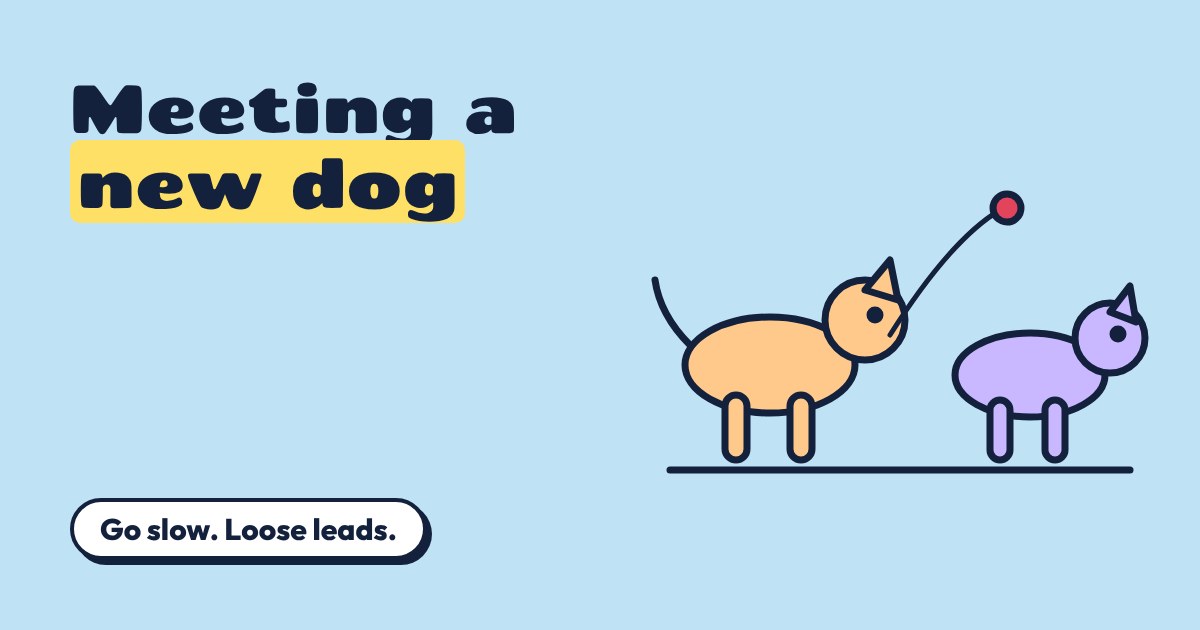
Why the first meeting matters
Dogs decide quickly whether a newcomer is safe, fun or a threat. A rushed hello in a hallway, with two excited people and a bowl nearby, can leave both dogs wary for weeks. A calm, slow start usually costs you a few extra walks and saves a lot of stress later.
There is no magic timetable. Welfare groups agree on the order of the steps, not on the number of days: move on only when both dogs look relaxed, and go back a step if either one doesn't. If you are still choosing a dog, ask the shelter or rescue how the dog behaves with others. Many will arrange a supervised meeting with your dog first.
What a good meeting looks like
Look at both dogs, not just the newcomer. Good signs are loose, wiggly bodies, sniffing, circling, play bows, or simply ignoring each other. A puppy lying down or rolling over for an adult to sniff is normal too.
Warning signs are raised hackles, a stiff body, a hard stare, growling, showing teeth or snapping. If you see them, call the dogs away cheerfully, using treats rather than grabbing collars or yanking the lead, which can make things worse. Then end the meeting and try again with more distance, or later.
Slow is fast: a calm first week makes for years of easy living together.
Food, toys and beds: the flashpoints
Most early arguments are about things, not dogs. Resource guarding means a dog protecting something it values, like a bowl, a chew or a bed. Remove the likely flashpoints before the newcomer arrives, and give each dog its own things.
The sources differ slightly on mealtimes. PDSA says to feed in separate rooms so neither dog can reach the other's bowl. RSPCA Australia says to keep bowls and treats out of shared areas. Both agree that food is a hotspot, so feeding apart is the safe choice.
When to ask for help
If either dog has a history of fighting, if they fight or cause injuries, or if one seems frightened all the time, stop the introductions. Keep them separated with crates or secure gates and ask your vet to refer you to a veterinary behaviourist or a certified trainer who uses reward-based methods. If a dog is hurt, see a vet. Never punish growling, because it is a useful warning.
Not sure whether the dogs suit each other? That is a fair question for the shelter or rescue. Most want the match to work, and they know the dog's history.
What to look for
Whatever your dogs are like, these things matter most:
- Neutral ground. Meet somewhere neither dog owns.
- Loose leads and a helper. Tension travels down the lead, so give each dog its own calm person.
- Short, happy sessions. End while both dogs still look relaxed.
- Space and supervision. Separate retreats, separate food, and no unsupervised time until it has gone well for a good while.