How do you socialise a puppy before vaccines are done? Build the checklist
Puppies are most open to new things in their first few months, long before vaccines are finished. This guide shows safe ways to socialise a young puppy: carrying, your own garden, vaccinated friends and puppy classes.
Use the checklist to tap off people, sounds, places, handling and animals your puppy has met calmly, see how much of the window is left, and learn the signs a puppy has had enough. Ask your vet when your puppy is protected.
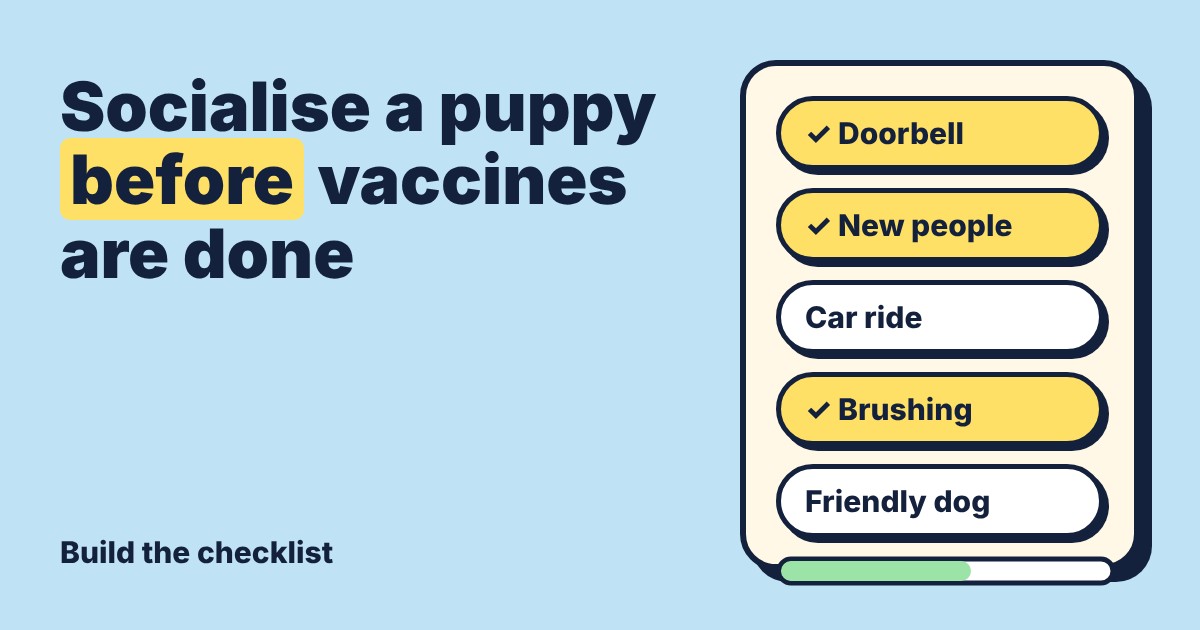
Between about 3 and 12 weeks old, a puppy's brain is unusually open to new things. What they meet in that time, and how it feels, shapes how relaxed they are about the world as an adult. The catch: their vaccines usually aren't finished yet. Here's how to do both safely.
The window is short, so start now
PDSA describes the main socialisation period as roughly 4 to 12 weeks old. Some behaviour groups, such as the American Veterinary Society of Animal Behavior, say it fades more gradually and closes somewhere between 12 and 16 weeks. Either way, it is over long before most owners feel ready, so waiting for the last jab before you start means missing most of it.
The aim is not to meet as many things as possible. It is to meet each thing calmly and on the puppy's terms, with something nice happening. One good, short experience beats ten overwhelming ones.
Safe ways to socialise before vaccines are done
- Ask your vet when your puppy is protected. Timing depends on the vaccines used and the area you live in, so this is a vet's call, not ours.
- Carry your puppy to see streets, shops and people from your arms, and keep them off the ground in places unvaccinated dogs have been.
- Use your own garden and home, if no unvaccinated dogs use the garden. Play recordings of everyday sounds quietly, with treats.
- Meet fully vaccinated, friendly adult dogs you know, in a place only they use.
- Ask about puppy classes. Many are designed for puppies who are partway through their vaccines. Ask the vet or the class which vaccines they need before you go.
Build your puppy's checklist
Pick your puppy's age, then tap each item once your puppy has met it calmly: relaxed body, happy to take a treat, easy to move on. If a puppy froze, hid or couldn't eat a treat, don't tick it. Try again later from further away.
Signs your puppy has had enough
Stop, move away and let the puppy settle if you see: a tucked tail, ears flat back, lip-licking or yawning, turning away, freezing, trembling, hiding behind you, or refusing a treat they'd normally love. Never push a puppy towards something scary, and never tell them off for being afraid. Comfort is fine: fear isn't "rewarded" by being kind. Try again later from further away.
Keep it kind and short
- Pair each new thing with treats, a toy or a cuddle, so it predicts good things.
- Keep sessions to a few minutes, then let the puppy nap. Puppies sleep a lot.
- Let your puppy choose to approach. People, especially children, should stay calm and let the puppy come to them.
- Watch dog-to-dog play. If one dog is overwhelmed, step in and take a break.
Calm and short beats lots and loud. Every good meeting counts, and so does every break.
When to ask for help
Ask your vet about vaccine timing and what's safe for your puppy now. If your puppy seems very fearful, or you're worried about their behaviour, ask the vet for a qualified trainer or behaviourist who uses reward-based methods only. Avoid anyone who suggests scaring, shouting at or "flooding" a puppy.