Does your dog need a GPS tracker? Check your safety layers first
A GPS tracker can show where a runaway dog is right now, but it only works when it is charged, attached and in signal. Answer six quick questions about your dog's recall, escapes, walks and ID to see which safety layers you already have and whether a tracker would add anything.
We cover what a microchip and an ID tag do, why up-to-date details matter, when a tracker is worth a look, what to do if your dog goes missing, and what to check in any tracker.
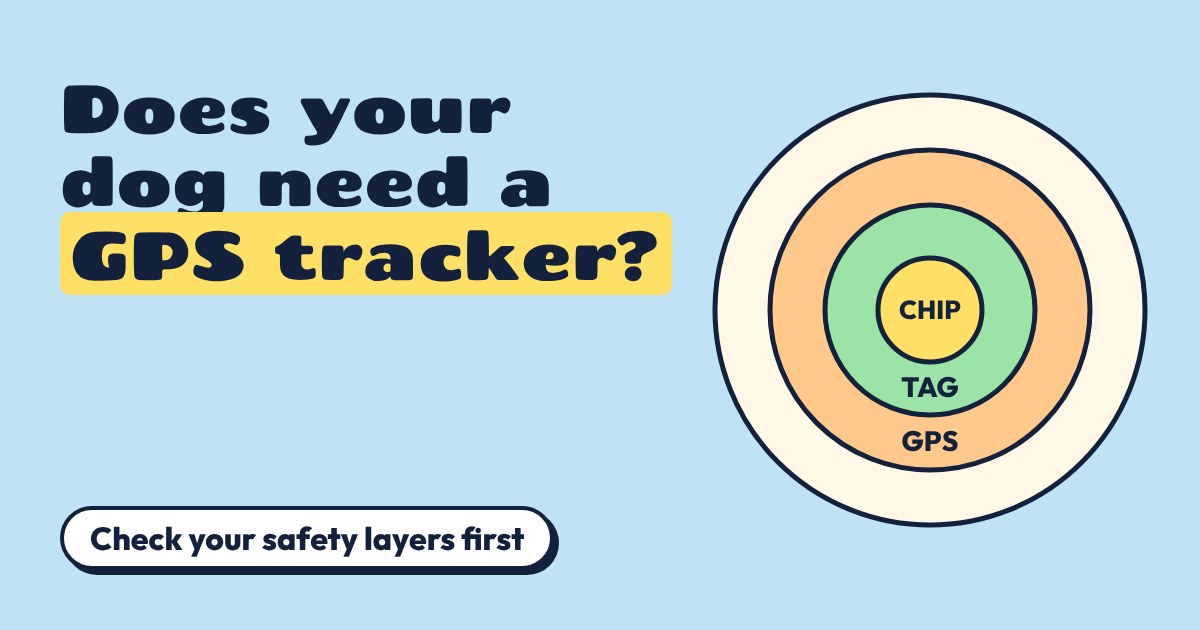
Does your dog need a GPS tracker? Check your safety layers first
A GPS tracker is a clever gadget, but it is the third layer of protection for a dog that might get lost, not the first. The first two are cheap and work all the time: a microchip with up-to-date details and a collar with an ID tag. This guide helps you see which layers your dog already has and whether a tracker would add something for the way you live.
What each layer does
A microchip is a tiny chip, about the size of a grain of rice, placed under the skin. It holds a number, not a location. When a vet or shelter scans a found dog, the number leads to your details on a database, which is why those details must stay current. Blue Cross points out that outdated details make reuniting you much less likely.
A collar tag is the quickest fix: anyone who finds your dog can phone you. Welfare groups such as PDSA say dogs should wear a collar and tag, and in the UK a dog in public must wear one with the owner's name and address even when microchipped. Tags can fall off, which is why the chip is the permanent back-up.
A GPS tracker is the only layer that can show where your dog is right now. It sits on the collar or harness and sends a location to your phone. Because it is attached to removable gear, it stops working if that gear comes off.
Tag and chip help a stranger find you. A tracker helps you find your dog.
When a tracker really helps
Trackers earn their keep for dogs who run off at speed, who are walked in woods or open country where you cannot see far, or who bolt when scared. They help less when the dog is always on a lead or garden-bound, and they cannot fix the cause of the problem. A tracker tells you where a runaway dog went, but good recall training and a secure garden stop it happening. Use reward-based training only: tasty treats, a long line in open places, and never punishment.
If your dog goes missing
Stay calm and search nearby first, including sheds and garages, and ask neighbours. Then call local vets and rescue centres, and report your dog to the microchip database so a scan flags the dog as missing. Tell the local dog warden and post on local lost-pet groups. PDSA advises against offering a reward, which can attract people seeking gain, and suggests contacting the police only if you believe your dog was stolen. After a dog comes home, a vet check is wise, even after a short time away.
What to look for in a tracker
- Fit for your dog. Check the weight and size limits, and that it attaches securely to a collar or harness without bothering your dog. Ask your vet if you have any worries about a small or older dog.
- Coverage where you walk. Many use a mobile network, so check it covers your usual routes and whether you need a paid plan. Some work only over short Bluetooth range, which is not true GPS.
- Battery and charging. Look at how long a charge lasts with live tracking, and make charging part of a weekly routine. A flat tracker finds nothing.
- Running costs. The device is often around €20–100, but a monthly or yearly plan may be extra.
Sources: Blue Cross, microchipping your dog; PDSA, what to do if you've lost a pet; PDSA, vet Q&A on reuniting with lost pets; PetsRadar, GPS dog trackers vs microchipping (a pet-advice site: its point is that chips and trackers work best together).