Birds ·
How do you tame a shy budgie? Climb the trust ladder
A shy budgie is a scared budgie, and the kind fix is to go slowly. This guide walks you up a five-rung trust ladder, from quiet settling-in days to treats through the bars, a still hand, stepping onto a finger and safe time out of the cage.
Pick where your bird is today, tick any fear signs you saw, and get a short plan for your next session. It also covers what stress looks like, what undoes trust and how to bird-proof a room. Sources are the RSPCA and avian-care guides.
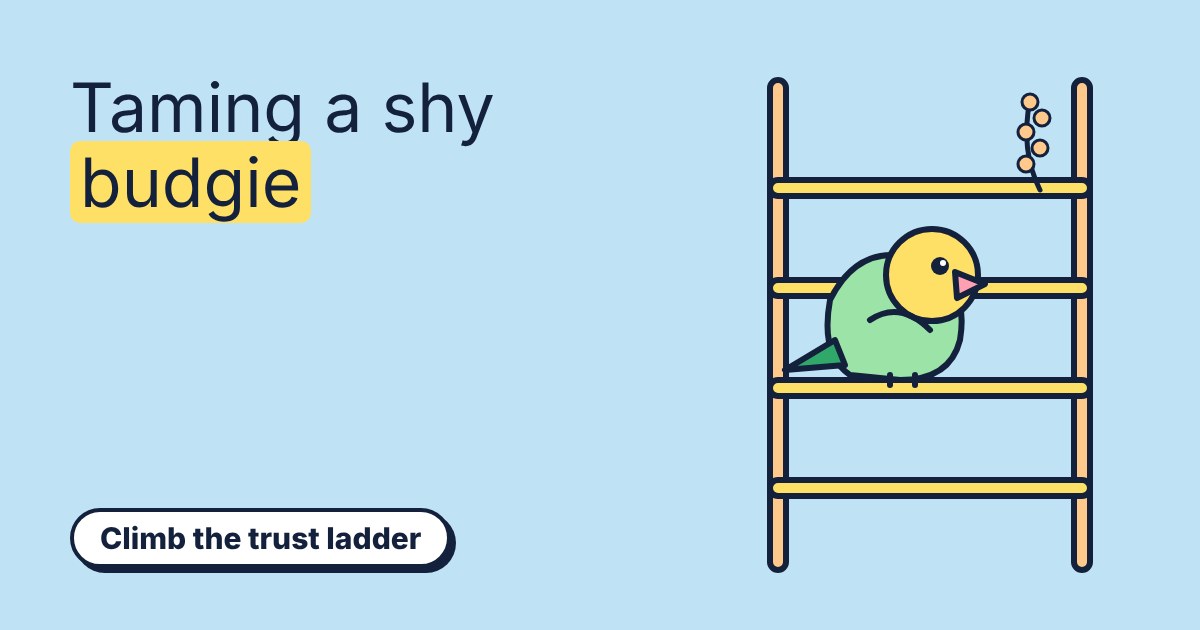
A shy budgie is a scared budgie
A budgie that flaps away from your hand is not being rude. In the wild, budgies are small birds that are eaten by bigger ones, so anything large and fast coming towards them looks like danger. Taming is simply teaching your bird, one small step at a time, that your hand is safe and even brings good things.
The kind way is reward-based: you offer something the bird likes, let it choose to come closer, and stop when it says no. The RSPCA advises rewarding pet birds with favourite foods, a gentle scratch or a favourite toy, and avoiding punishment, loud noises, sudden movements and fast hands. There is no deadline. Some budgies are hand-feeding within days, while nervous ones can need weeks or longer.
The five rungs of the trust ladder
- Settling in. A newly arrived bird needs quiet days to learn the room. Sit nearby, talk softly and do the everyday things around it. No hands in the cage yet.
- Treats through the bars. Offer a little millet spray (a favourite treat) through the bars and let the bird come to it.
- A still hand. Once the bird eats confidently, rest your hand inside the cage, holding millet, and keep it still. Move it closer only a little at a time.
- Step up. Place a finger level with the bird's feet, give the same cue each time (for example "up") and reward the moment it steps on. A small handheld perch can help a nervous bird.
- Time out of the cage. Only when the bird steps up calmly, practise in a bird-safe room (see below).
Where is your budgie today?
What stress looks like
Budgies cannot tell you they are scared, so watch the body. A comfortable budgie has soft, relaxed feathers, chirps and chatters, preens, explores and may rest on one foot. A stressed one freezes, crouches or leans away, goes unusually quiet, breathes fast, flaps frantically around the cage or bites defensively. If you see these, stop, move away and give it space.
The bird sets the pace. If it backs off, you back off, and you try again later from an easier rung.
Things that undo trust
- Chasing, grabbing or cornering the bird, or following it around the cage. The only exception is catching it for health care, which is best done as calmly and quickly as possible.
- Reaching down over the top of the bird, which looks like a predator.
- Shouting at or punishing a bite. Look at what happened just before it, usually a hand that came too far too fast.
- Pushing on with step-up when the bird panics at a hand. Go back to treats and a still hand.
Setbacks are normal after a scare, a move or a few days without practice. Return to the rung where the bird was comfortable and rebuild from there.
Before the bird comes out
Once your bird steps up calmly, prepare a room first. Close windows and outer doors, switch off ceiling fans (birds cannot see the blades), keep other pets out, cover open water such as sinks, toilets and glasses, and cover or remove mirrors and unmarked glass the bird might fly into. Never use non-stick (PTFE) pans or heaters with a non-stick coating near birds: overheated PTFE gives off fumes that can kill birds, as vets warn.
Keep practice sessions short and finish while the bird is still happy. If your bird stops eating, looks fluffed up and sleepy all day, or has changed its droppings or breathing, that is a job for a vet, not a taming plan. Millet is a treat rather than a meal, so ask your vet how much suits your bird.