The rule of thumb: one box per cat, plus one
Ask vets and cat-welfare groups how many litter boxes a home needs and they give the same answer: one for each cat, plus one extra. Two cats means three boxes. One cat means two. It sounds like a lot, but for a cat the bathroom is not a shared facility. A box that smells of another cat, sits in a noisy corner or is simply too small can make a cat decide the carpet is a better idea.
The extra box isn't about volume. It's about choice. Cats like to pick where to go, and the boxes should be spread around the home, not lined up in a row. Three boxes side by side count as one big box in a cat's mind, especially if a more confident housemate guards that corner.
How big is big enough?
International Cat Care suggests a tray about one and a half times the length of your cat, measured from the nose to the base of the tail. The AAHA/AAFP life-stage guidelines use the same 1.5 idea but measure to the tip of the tail, which gives a bigger box. The sources differ slightly, so when in doubt, go bigger. Both agree that many boxes sold in shops are too small, and a large storage tub with a low entrance cut into one side is a popular fix.
Try the planner below. Measure your cat once with a soft tape (a treat in front of the nose helps), then see how many boxes and what length to look for.
One box per cat plus one, each about 1.5 times your cat's length, in quiet spots around the home.
Where to put them
Choose somewhere quiet and easy to reach, away from food and water bowls, busy walkways, washing machines and cat flaps. Cats do best with an escape route, so avoid a dead-end corner where a housemate could block the way out. Older cats and kittens need boxes with a low edge they can step into without climbing.
Litter, scooping and covers
- Litter: most cats prefer a fine, sand-like texture, and many like clumping litter. International Cat Care mentions a depth of about 3 cm. Vets generally suggest unscented litter, since cats have a strong sense of smell.
- Scooping: at least twice a day, and a full wash every 2 to 4 weeks with clumping litter (weekly with non-clumping). Use hot water rather than strong chemicals.
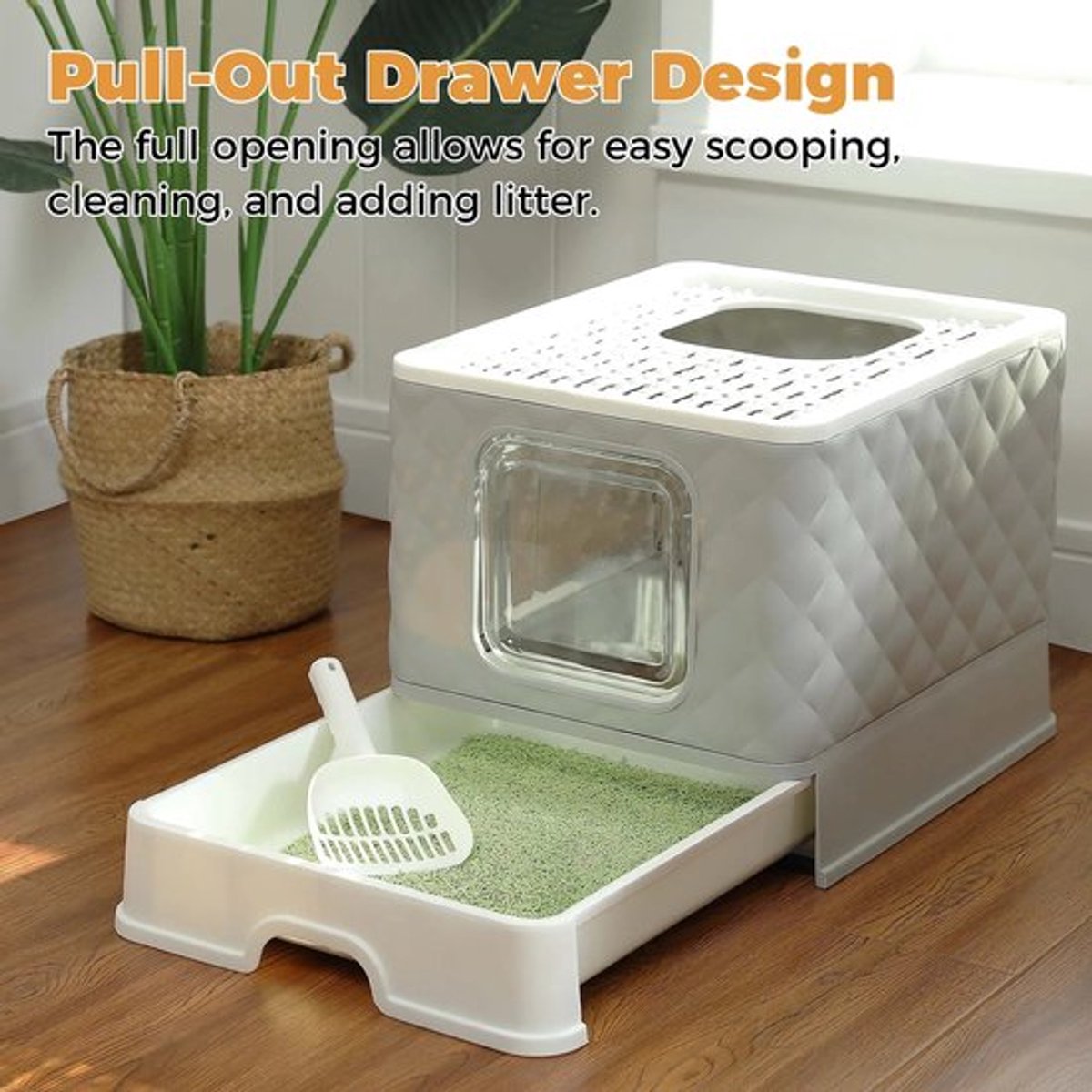
- Hoods: many cats cope with covered boxes, but some feel trapped, and big cats can find them cramped. If you use one, watch your cat's reaction, and consider an open box instead if they hesitate.
- Never scold: if a cat goes outside the box, don't punish or carry them to it. That adds stress and can make things worse.
When it isn't about the box
If your cat suddenly starts going elsewhere, straining, going very often or crying in the box, call your vet. Urinary problems and pain (for example from arthritis) are common reasons, and they can be serious, so don't wait for a litter-box fix to work.
What to look for
- Size first: the inside length is what counts, not the label. Check it against your planner result.
- A low entrance so kittens, seniors and stiff joints can get in.
- Easy cleaning: a smooth interior and few crevices, so scooping and washing actually happen.
- Automatic boxes: they save scooping time, but you still need to check the litter, empty the waste and make sure your cat will walk in. Introduce one slowly beside the old box, and keep the old one for a while.
Sources