Cats ·
How do you brush a cat's teeth? Climb the gentle toothbrush ladder
Cats hide dental pain well, and plaque turns into tartar within days. This guide shows how to teach your cat to accept tooth brushing slowly, using a five-step ladder with treats and praise.
Pick the rung that matches your cat today, see exactly what to practise next, and learn why human toothpaste is never safe for cats. It also lists the signs that mean a vet visit, not more brushing.
Why cat teeth need care
Plaque is a soft, sticky film of bacteria that builds up on teeth within a day or two. Left alone, it hardens into tartar, and tartar irritates the gums. Sore gums (gingivitis) can lead to gum disease, pain and lost teeth, and cats are good at hiding that they hurt. Vet sources describe regular home care as just as important for cats as for people.
Brushing is the best-studied way to keep plaque down. The Veterinary Oral Health Council says ideally every tooth is brushed every day, and that brushing done regularly still beats none. A few times a week is a good start. Daily is the goal.
Check first, then start
Book a quick mouth check with your vet before you begin. Brushing won't feel nice if the gums are already sore, and tartar that has formed can only be removed by a professional dental clean at the vet. Brushing keeps a clean mouth clean; it does not scrub off old tartar.
Find your cat's rung
Pick the line that sounds most like your cat today. The card shows what to practise next. Do one step per day or so and move up only when the current step is boring for your cat, not just put up with.
The toothpaste rule
Never use human toothpaste on a cat. Use a pet toothpaste made for cats.
Human toothpaste can contain fluoride and xylitol, which vet schools warn are toxic to pets, and foaming agents that upset the stomach when swallowed. Cats can't spit. Pet toothpastes come in flavours like poultry or fish. If your cat refuses all of them, a vet school suggests a lick of something she likes, such as a little watered-down plain peanut butter or cream cheese, as a stand-in; check the ingredients carry no xylitol. Ask your vet if you're unsure.
Gentle brushing, step by step
- Pick a calm moment. A sleepy cat after a meal is ideal. Never brush a cat who is playing, anxious or cornered.
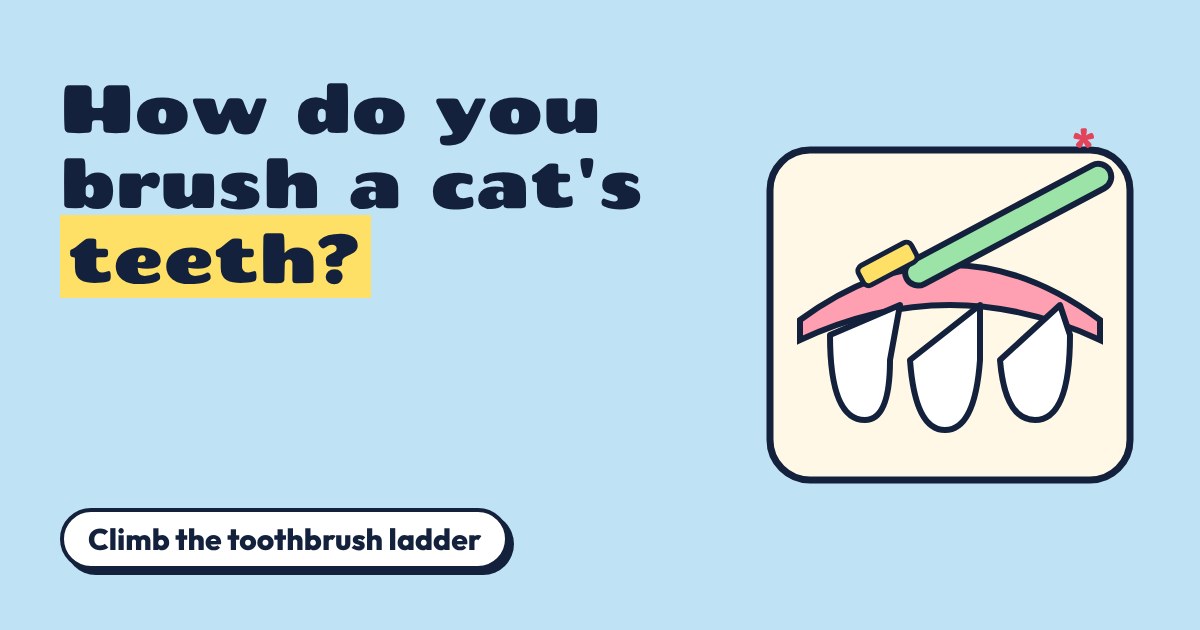
- Go for the outside. Brush the cheek-facing surfaces; that is where brushing works best. You don't need to open her mouth wide.
- Small circles at the gum line. Soft bristles, light pressure, a few teeth at a time.
- Stop early and reward. A treat or a game straight after keeps it a good memory.
If a toothbrush is a step too far, a gauze-wrapped finger or a cotton bud dipped in the water from a tin of tuna is a kind alternative, and still removes some plaque.
What not to do
Never scold, hold a cat down firmly or force her mouth open. That teaches her to fear her mouth being touched and makes every future try harder. If you hit a wall, go back a rung and slow down.
When to ask a vet
Ask your vet before you start and any time you see bad breath that has changed, red or bleeding gums, drooling, dropping food, chewing on one side, pawing at the mouth or a cat who suddenly won't eat. These can mean pain or illness that brushing can't fix, and only a vet can say what is going on. Your vet can also tell you whether a dental diet, a water additive or a treat with the VOHC seal could add to brushing, and when a professional clean is due.