Cats ·
How many litter trays does your cat need? Count them and plan where they go
Cats like one tray each, plus a spare, spread through the home. This guide shows how many trays your home needs, how big they should be and where they work best.
Put in your number of cats, the floors they can reach and your biggest cat's length, and get a tray count, a minimum tray size and a placement plan. Includes cleaning basics and when to ask a vet.
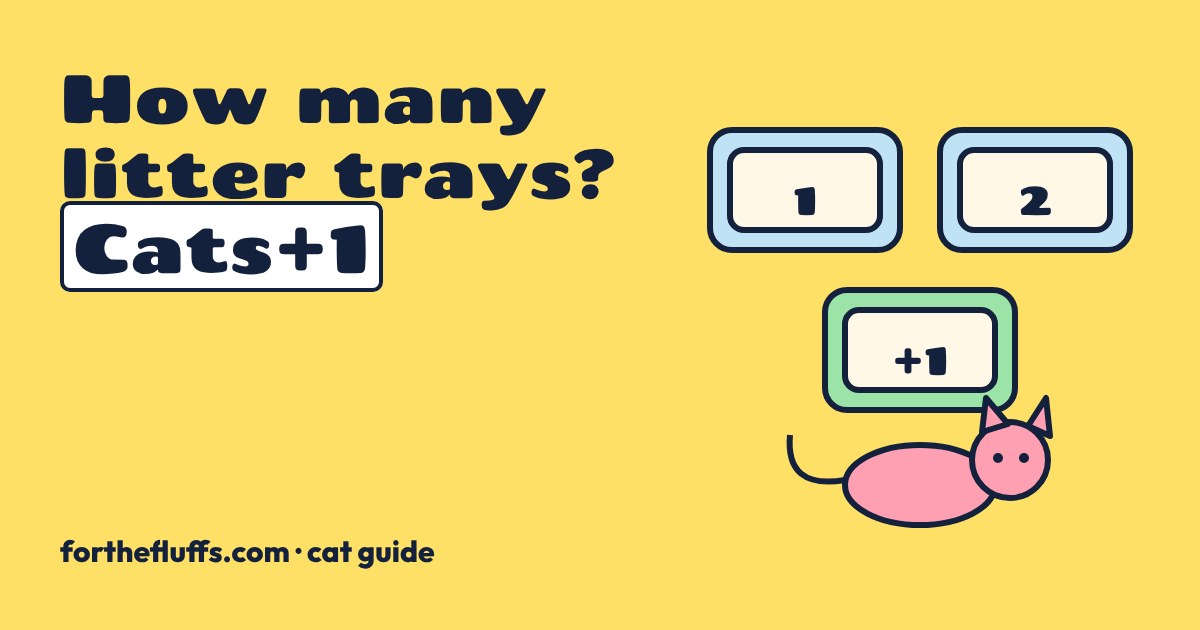
The one-more-than-your-cats rule
Cats are fussy about their toilets, and with good reason: a tray that is too small, too smelly, too hard to reach or guarded by a housemate can make a cat decide the carpet is a better idea. The usual advice from cat charities is simple: one tray for each cat, plus one extra. Two cats means three trays. One cat means two.
That "plus one" is a rule of thumb, not a law of nature. Cats Protection's behaviour guidance says the number is not based on hard evidence, but it is a sensible way to make sure a cat always has a free, unguarded option. Put in your numbers below to see what it means for your home.
Why the extras matter
Cats are solitary hunters by nature, and many see the toilet as a private, even slightly risky place. In a home with more than one cat, one cat can quietly "guard" a tray by sitting near it, and the others then avoid it without you ever noticing. A spare tray in a different spot gives the shy cat a way out.
Where you put the trays matters as much as how many. Placing three trays in a row only gives you one big tray in the eyes of a cat, so spread them out: different rooms, different corners, and on each floor if your cat uses the stairs.
Where trays work best
- Quiet and private, away from busy doorways, noisy appliances, cat flaps and full-length windows.
- Away from food, water and beds. Most cats prefer to keep the toilet and the dining room apart.
- Easy to reach. A cat should not have to cross a room where a housemate or dog is waiting, or climb stairs when it is old or stiff.
- With a view. A corner or wall at the tray's back lets the cat see anything approaching.
Size, litter and cleaning
A common guideline is a tray about one and a half times the length of the cat, measured from nose to the base of the tail, which is what the calculator uses. Many standard trays are smaller than that, so a large storage box with a low entrance is a popular, cheap alternative. Older or stiff cats do best with a low entrance.
Cats Protection suggests around 3 cm of a fine, sand-like litter, and warns that scented litter and scented deodorants can put cats off. Scoop waste at least once or twice a day, and empty and wash the whole tray with hot water and mild detergent weekly. Hooded trays hold smells in, which can put cats off, so they need extra cleaning, and some cats simply dislike them: if you use one, remove the flap.
Avoid disinfectants that contain phenols; they are toxic to cats. If you are not sure what is safe, ask your vet which cleaner to use.
If your cat suddenly stops using the tray, do not scold it. Ask your vet to check for a health problem first.
When to ask a vet
Toileting outside the tray can be a sign of pain, an illness or stress, not bad manners. Straining, crying in the tray, blood in the urine, going far more often than usual or a sudden change in habits all deserve a prompt call to your vet. Never punish a cat for an accident, since fear makes toileting problems worse. A vet can tell you what is going on, and can point you to a qualified behaviourist if the cause is stress.
What to look for
- Enough trays: one per cat plus one, spread across the home.
- A tray about 1.5 times your cat's length, with a low entrance for older cats.
- Unscented, fine litter at around 3 cm, scooped at least daily.
- Quiet spots away from food and water, with no cat able to guard every tray.