Cats ·
Is your cat a healthy weight? Check the ribs, waist and belly
A quick, vet-style way to check whether your cat is a healthy weight: three checks you can do at home, with ribs, waist and belly, and a result that shows what your answers suggest.
It explains what a body condition score is, why extra weight matters, and why a round cat should lose weight slowly with a vet, not on a crash diet. It is a rough guide, not a diagnosis.
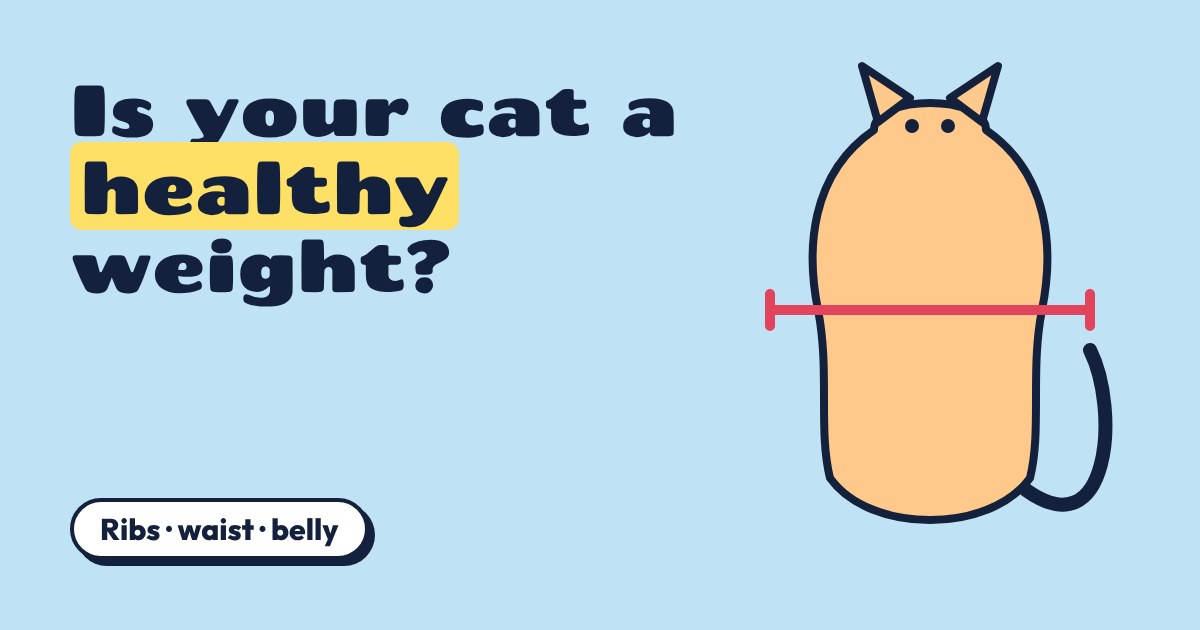
Most owners can tell a cat is very thin or very round. The tricky part is the middle, where a cat that is a little too heavy just looks "fluffy". Vets use a simple hands-and-eyes check called a body condition score. You can do the same three checks at home in a minute, and no scales are needed.
The three checks vets use
Veterinary groups such as WSAVA score cats from 1 to 9, where 5 is ideal. The score comes from three things you can feel or see:
- Ribs: press gently with your fingertips along the side of the chest. In a healthy cat you can feel the ribs under a thin layer of padding, a bit like the back of your hand.
- Waist from above: stand over your cat while it stands still. There should be a gentle waist (a "pinch in") behind the ribs.
- Tummy from the side: the belly should tuck up behind the ribcage. A small bit of loose skin or fat under the belly is normal, a swinging pouch or a round belly is not the same thing.
Long fur hides all of this, so use your hands first and your eyes second.
If you can't feel your cat's ribs and can't see a waist, it is time to talk to your vet, not to cut the bowl in half.
Why a few extra grams matter
A cat is small, so even a little extra weight is a big share of its body. Vets link extra weight in cats to joint strain and a higher risk of illnesses such as diabetes. Royal Canin's vet guidance counts a cat as overweight at roughly 10–20% above its ideal weight, so for a 4 kg cat that is around half a kilo of extra padding.
If your cat looks round: go slowly
Do not put a cat on a crash diet. Cats that eat too little or lose weight too fast can develop hepatic lipidosis, a serious liver problem. Weight-loss guidance from pet-obesity groups suggests a gentle pace of around 2% of body weight a month as a starting point, and says your vet's plan comes first.
- Have the vet check your cat first. Some medical problems cause weight gain, and some cause weight loss.
- Ask the vet which food and how much, including treats. Measure meals with a scale or measuring cup rather than by eye.
- Add play and movement in short sessions: a wand toy, a few climbing spots, a food puzzle.
- Weigh your cat every few weeks and write it down.
- If your cat stops eating, call the vet the same day.
When to ask a vet
See a vet if your cat is gaining or losing weight without a change in food, if the belly looks swollen rather than just round, if appetite or thirst changes, or if you can't feel the ribs at all. Never give human medicines or diet products. This guide helps you notice; only a vet can diagnose.