Dogs ·
Is your dog a healthy weight? Check the ribs, waist and tummy
Is your dog a healthy weight? Two dogs can weigh the same and look nothing alike, so vets score body condition by feel and by eye instead of trusting the scale alone.
Run the three-minute check at home: feel the ribs, look for a waist from above and a tummy tuck from the side, then tap your answers in the quiz to see roughly where your dog sits and what to do next, with vet advice on when to ask for help.
Why the scale isn't enough
Two dogs can both weigh 20 kg and look completely different: one is lean and athletic, the other is carrying a coat of extra padding. That is why vets don't rely on weight alone. They use a body condition score, a 1 to 9 rating of how much body fat a dog carries, judged by feel and by eye. A score of 4 or 5 is the ideal. Below that is too lean, above it is carrying extra.
It matters because extra weight is common in pet dogs and it puts a strain on joints, breathing and energy. The good news: you can do the same three checks at home in about a minute, with a hungry dog and a treat to keep them still.
The three checks, one minute
Stand your dog up on a non-slip floor and do these in order:
- Feel the ribs. Run your flat hands along both sides of the ribcage. In a dog at a good weight you can feel each rib easily under a thin, even layer of padding. If you have to press firmly to find them, there is extra cover.
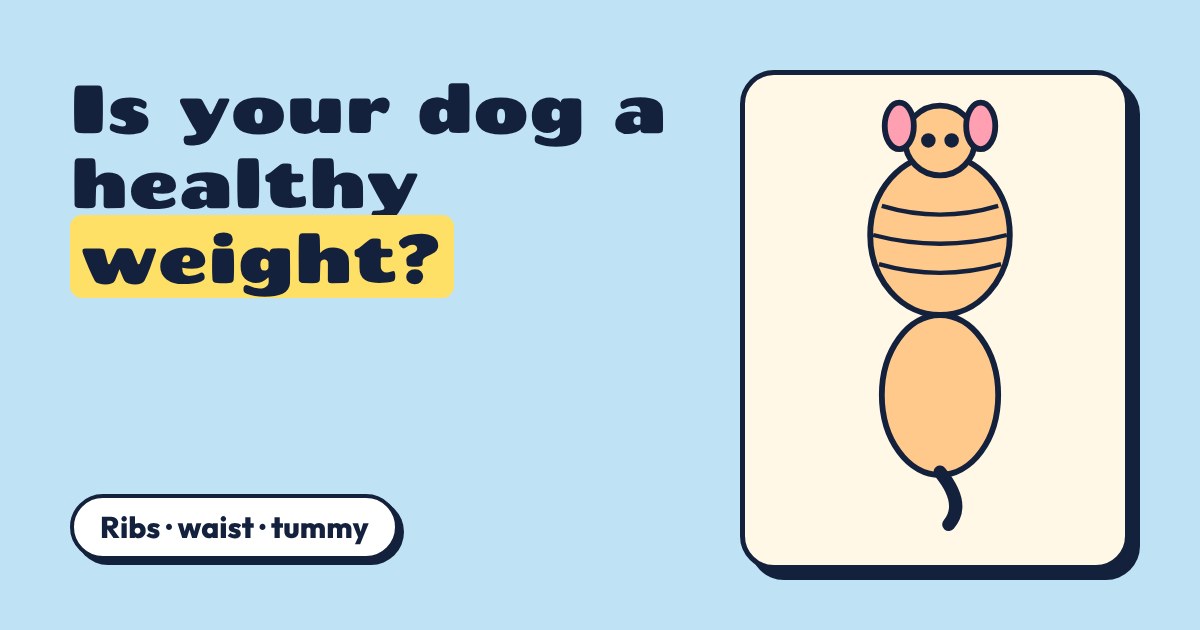
- Look from above. Stand over your dog. You should see a waist: a gentle inward curve behind the ribs, before the hips. A straight line, or a body that bulges out, means extra padding.
- Look from the side. The belly should rise up from the bottom of the chest towards the back legs. This is called the abdominal tuck. A belly that runs level or hangs lower than the chest is a sign of extra weight.
A thick or fluffy coat can hide the shape, so rely on touch first. Deep-chested and slim-built breeds look different from stocky ones, so judge your own dog's shape, not a photo of a different breed.
What if the answer is "a bit chunky"?
You are in good company, and it is fixable with small, kind changes. These come from vet and welfare charities:
- Weigh the meals. A scoop is not a measure. Use kitchen scales and the feeding guide on the food packet as a starting point, then adjust with your vet.
- Count the treats. PDSA suggests treats stay under about a tenth of the daily food, and the main meal shrinks to make up for them. Training treats count too, so keep them tiny or use a bit of the dog's own dinner.
- Move more, together. Add a few minutes to walks, play a sniffing game or practise a trick. Exercise is more fun when it comes with praise.
- Give everyone the same rules. One person sneaking cheese undoes a week of effort.
Don't put your dog on a strict or fast diet yourself. A dog who needs to lose a lot of weight should have a plan from the vet. Many practices run weight clinics, so it is fine to ask.
What if your dog looks too thin?
Ribs you can see from across the room, hip bones that stand out or a sudden change in weight all call for a vet visit. There are many reasons a dog can lose weight, and only a vet can find out which applies. Please don't change the food or add supplements first.
Ribs you can feel easily, a waist from above and a tummy that tucks up from the side: that is the shape to aim for.
What to look for
- Check by touch first. Coats and photos can fool the eye.
- Repeat the check every month, on the same day, and write down what you find.
- Rely on a trend, not one reading. A dog who is slowly getting rounder needs a plan before a dog who has always been stocky and stable.
- When in doubt, ask. A vet can score your dog, weigh them and tell you what weight is right for their frame.