Cats ·
Should your cat wear a harness? Climb the treat-first harness ladder
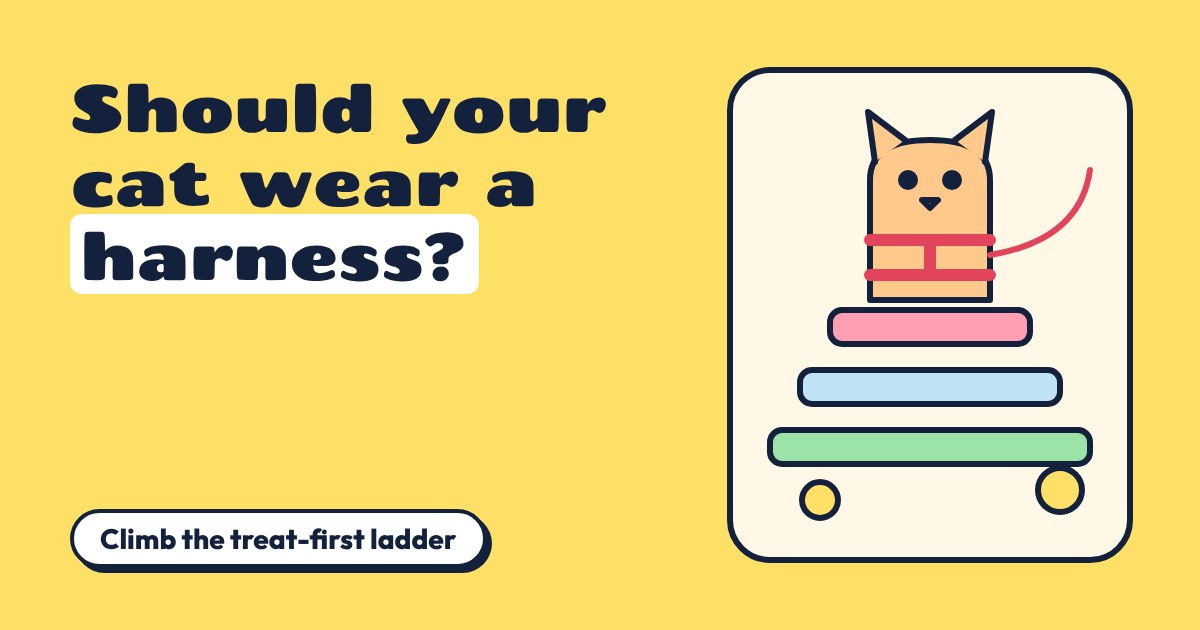
Can your cat learn to wear a harness, and should it? Some cats enjoy a quiet garden walk; others find it stressful. This guide helps you decide, then walks you up a six-rung treat-first ladder, from sniffing the harness to a calm first outing.
Pick your cat's temperament, age and vet-check status and tap a rung to see what to do today, for how long, and when to move on. It also covers the two-finger fit check, why no harness is escape-proof, and when to skip walks. Ask your vet about vaccines and microchips.
Is a harness walk right for your cat?
Some cats love sniffing a garden on a lead. Others freeze, flatten or bolt. Welfare groups such as the SPCA say harness walks can suit some cats, but only when the harness is secure, the place is safe and the walk stops the moment the cat looks stressed. So the first question is not "which harness?" but "is this cat a good candidate, and how slowly can we go?"
Use the ladder below to see your cat's next step. It works from the shy-cat-friendly end: every rung is a treat party, and you only climb when your cat is relaxed.
Why slow works
A harness changes how a cat's body feels, and most cats notice straight away. If it goes on once and the cat is dragged outside, the harness predicts something scary. If it goes on while treats rain down and then comes off again, it predicts snacks. That is why every rung above is tiny, and why the harness comes off before your cat loses interest in the food.
Never scold, push or force. Do not harness a cat that is crying or pestering you for something else; wait until they are calm.
Fit and safety checks
- Two fingers. You should be able to slide two fingers between the straps and your cat's body. Looser can mean an escape, tighter is uncomfortable.
- Harness, not collar. Clip the lead to the harness, on the back. A lead on a collar can hurt a cat's delicate neck.
- No harness is escape-proof. A microchip, a collar with contact details and a quiet, enclosed starting place are your safety net. A collapsible carrier is handy if your cat gets stressed.
- Never tie a cat up outdoors, even for a moment, and don't leave them unattended.
- Carry your cat out rather than letting them walk through the door alone, and put the harness on well away from the exit.
- Avoid sensitive wildlife areas. In some places walking a cat in nature reserves or national parks is not allowed.
Your cat sets the pace. If they crouch, flatten their ears, freeze or cry, the walk is over for today.
When to skip it
For a shy or anxious cat, a harness walk is more stress than fun, and that is fine. A secure window perch, a bird-feeder outside the glass, puzzle feeders and short play sessions give indoor cats a lot of the same interest. If you worry about your cat's health, mobility or behaviour, ask your vet before starting.
What to look for
At any budget: an adjustable chest strap and neck strap so you can get the two-finger fit, soft edges that don't rub, and a secure buckle your cat can't wriggle out of. A light lead is better than a heavy one. Try the harness on indoors first and return it if your cat won't walk in it after a patient introduction.
Sources
- SPCA New Zealand: cats in harnesses and on leashes
- SF SPCA: leash training for cats
- Cat Protection Society: harness and lead training
Sources agree on slow, treat-based steps and on stopping when a cat is stressed. They differ on how outgoing a cat must be to try it, so we lean careful. Always ask your vet about vaccines, microchipping and parasite protection.