Cats ·
How do you trim a cat's claws without a fight? Climb the calm-paw ladder
Most cats can learn to accept a claw trim, but only if you teach it slowly. This guide shows where the quick is and where to cut, then lets you pick your cat's comfort level and get the next step on a five-rung ladder, from touching a paw to trimming a few claws at once.
You will also find what to do if you nick the quick, why you should never force a trim, and when to ask a vet instead.
Why claws need care
Cats keep their claws sharp by scratching, but indoor cats often don't wear them down enough. Long claws can snag in carpet and blankets, curl round and press into the paw pad, and make furniture scratching more costly for you. Trimming the tips every few weeks helps, and most cats will accept it if you go at their pace.
The key is not the clippers. It is teaching your cat that a paw being held means something nice is coming. That takes days, not minutes, so start before you actually need to cut anything.
Where is the quick?
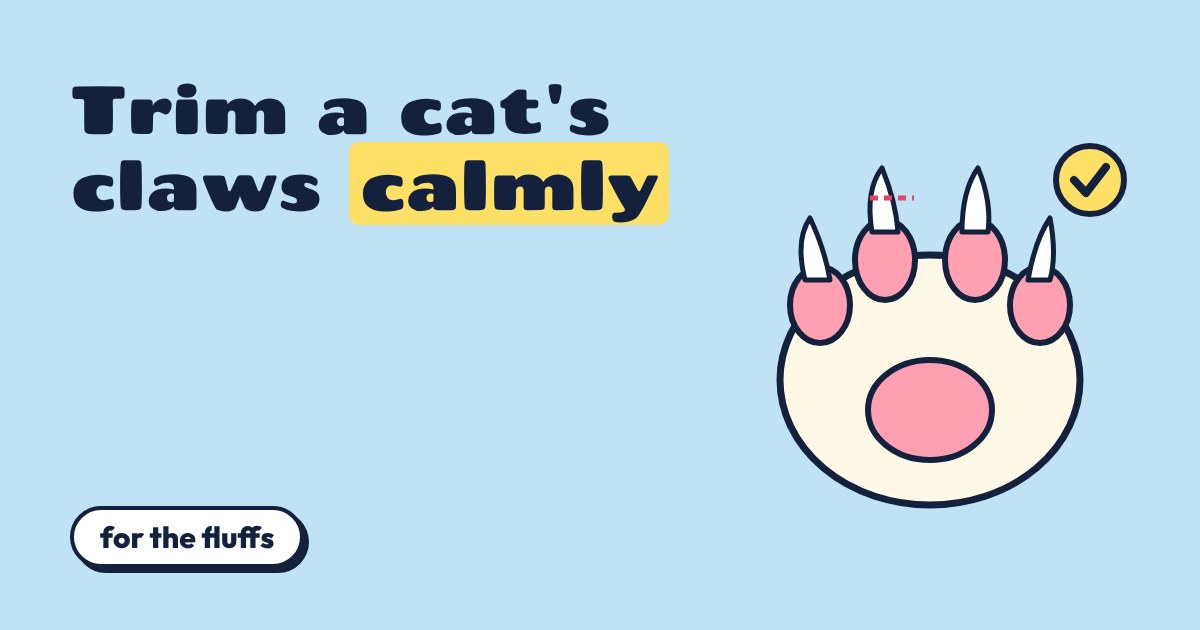
Each claw has a pink core called the quick. It has blood vessels and nerves, so cutting into it hurts and bleeds. You only ever remove the clear, curved tip beyond it. If your cat has dark claws and you can't see the pink, take off even less: a tiny bit of the very tip is enough.
Find your cat's rung
Pick the line that sounds most like your cat today. The card shows what to practise next. Move up only when the current step is boring for your cat, not just tolerated.
The trim itself
- Pick a calm moment. A sleepy cat after a meal is ideal. Never trim a cat who is playing, anxious or cornered.
- Use the right clippers. Clippers made for cats cut cleanly. Human clippers and scissors can crush and split the claw.
- Press the toe, spot the quick, snip the tip. Cut only the clear tip, straight across, well away from the pink.
- Stop early. One or two claws a session is fine. A treat after each cut keeps the mood good.
Short and sweet beats finished and fought. Stop while your cat is still calm.
If you nick the quick
It happens to everyone sooner or later. Stay calm, press a little cornflour or styptic powder on the tip and hold your cat gently for a minute. Then end the session with a treat. If bleeding does not stop or the claw looks sore afterwards, call your vet.
Things that are not okay
Never scold, restrain firmly or "scruff" a cat to get a trim done. That teaches your cat to fear paw handling and makes the next time harder. Declawing is not a form of trimming: it is the surgical removal of the last bone of each toe, and vet groups such as the American Association of Feline Practitioners strongly oppose it as an elective procedure. Trimming, scratching posts and nail caps are the kind alternatives.
When to ask a vet
Ask your vet or a vet nurse for a demonstration if you are unsure, if your cat will not accept handling at all, or if you see claws that are very thick, curled into the pad, split or bleeding. Older cats often grow thicker, more brittle claws and may need more frequent checks. A painful paw is a reason for a vet check, not a clipping at home.