How do you size a dog harness? Measure the chest and check the chart
Harness sizes are not standard, so "medium" can mean very different things. Measure your dog's chest once, then check it against the exact size chart with this little fit checker.
Then work through a six-point fit check on the dog: fingers under the straps, free shoulders, no rubbing, no backing out. Includes the one-versus-two-finger advice from different sources, how to introduce a harness with treats, and when to ask a vet.
Why harness size is trickier than it looks
A harness that is too loose lets a worried dog back out of it. One that is too tight can rub the skin and stop the front legs from reaching forward. There is no single standard for sizes: one brand sizes by the dog's measurements, another by the harness's own dimensions, so "medium" can mean very different things. The fix is two steps: measure your dog once, then compare those numbers with the size chart of the exact harness you are looking at.
How to measure your dog
Use a soft tape measure (or a piece of string, then lay it against a ruler), and keep a few treats handy so measuring feels like a game. Measure while your dog is standing.
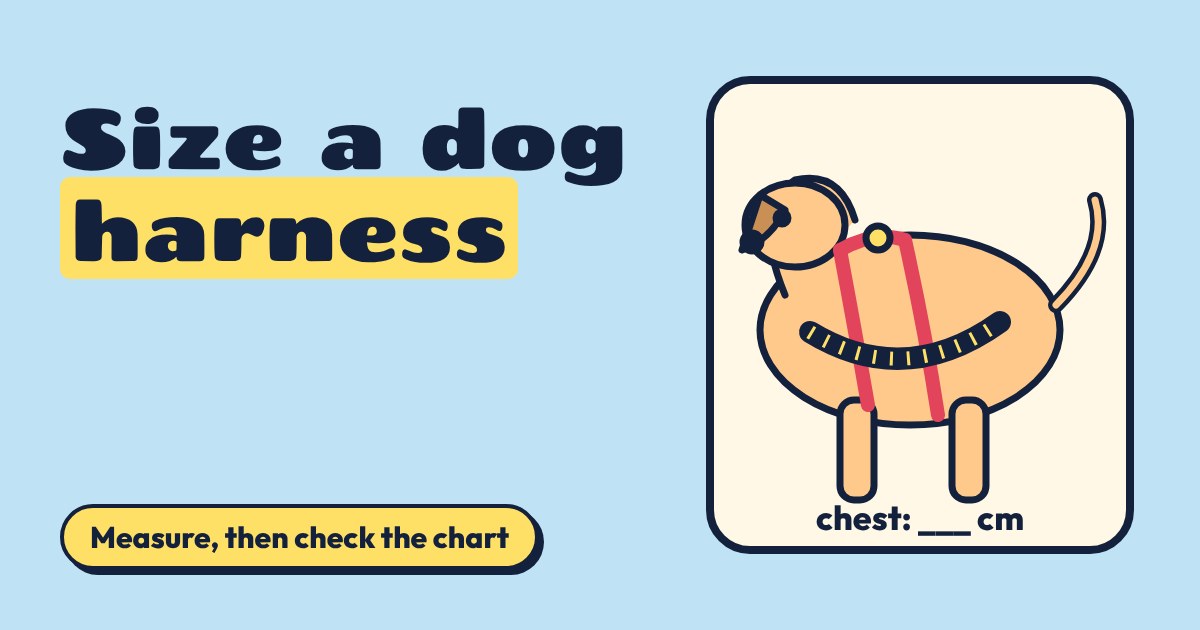
- Chest: wrap the tape around the widest part of the rib cage, usually just behind the front legs. Snug, but not tight.
- Neck: measure where a collar would sit, snug but not tight. Many harnesses only need the chest number, but some charts ask for both.
- Weight: handy as a sanity check, but never size by weight alone. A deep-chested whippet and a round-bodied bulldog can weigh the same and need very different harnesses.
Measure the chest, compare with that harness's own chart, and always do the finger and shoulder check on the dog.
Reading a size chart without getting fooled
Check first whether the chart lists the dog's measurements a size suits, or the harness's own dimensions. If it lists the harness, the strap needs to open wider than your dog's chest measurement, with room for the fit check; if you can't tell, ask the maker. If your dog falls between two sizes, the American Kennel Club advises taking the larger one, and looking for an adjustable model if neither feels right. Never rely on "small, medium, large" from a past purchase, as sizes change from brand to brand.
Fit does not stay the same either. Puppies outgrow harnesses quickly, and dogs that gain or lose weight, or grow a thick winter coat, may need a re-check.
How snug is snug? Sources differ
The American Kennel Club suggests two fingers under the straps. Dogs Trust says a finger should slide between strap and body, while the harness must still stay put and not let the dog slip out. In practice that means one to two fingers: loose enough to be comfortable, snug enough that it cannot rotate or pull over the head. If the maker's instructions say otherwise, follow them.
Which shape?
A harness spreads the pressure over the chest and shoulders instead of the neck. Some dogs prefer a step-in design, which does not need to go over the head, a good option if your dog dislikes things near the face. Whatever the style, choose one that does not restrict the natural movement of the shoulders. A front clip can make steering easier for a dog learning loose-lead walking, but it works best alongside reward-based training rather than replacing it. Avoid designs that tighten when the dog pulls: a harness should never be used to punish.
Many dogs need a little time to accept wearing one. Dogs Trust suggests going slowly: let your dog sniff it with treats around it, feed treats through the head hole, then add the clip sounds, then fasten it with more treats, then a short walk. If your dog seems worried, go back a step.
What to look for
- An adjustable chest and neck, so you can get both the fit check and room to grow.
- Straps that stay clear of the front of the shoulders and sit behind the elbows.
- A chart that tells you what it measures (dog or harness) with centimetres for chest and neck.
- Soft edges and breathable material. Nylon is durable but warm, mesh is cooler but can chafe, padding is gentler but holds heat. Pick for your dog's coat and the climate.
Budget: a good harness usually costs around €15–50, and a higher price does not guarantee a better fit.
When to ask a vet
If your dog limps, yelps, changes the way they walk, loses fur or has sore skin where the straps sit, stop using the harness and ask your vet. They can check whether the cause is the fit or something else. Do not try to diagnose it yourself.