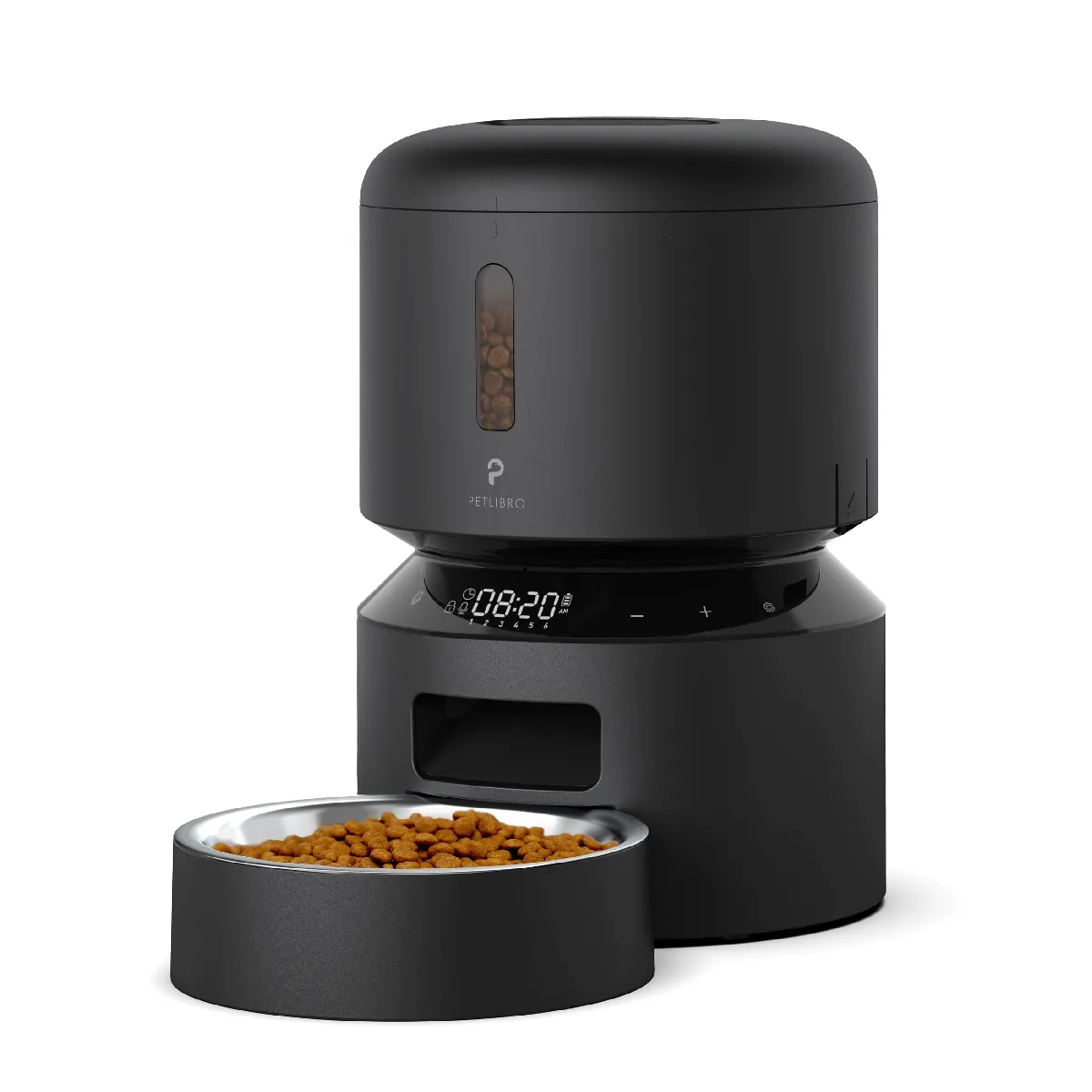
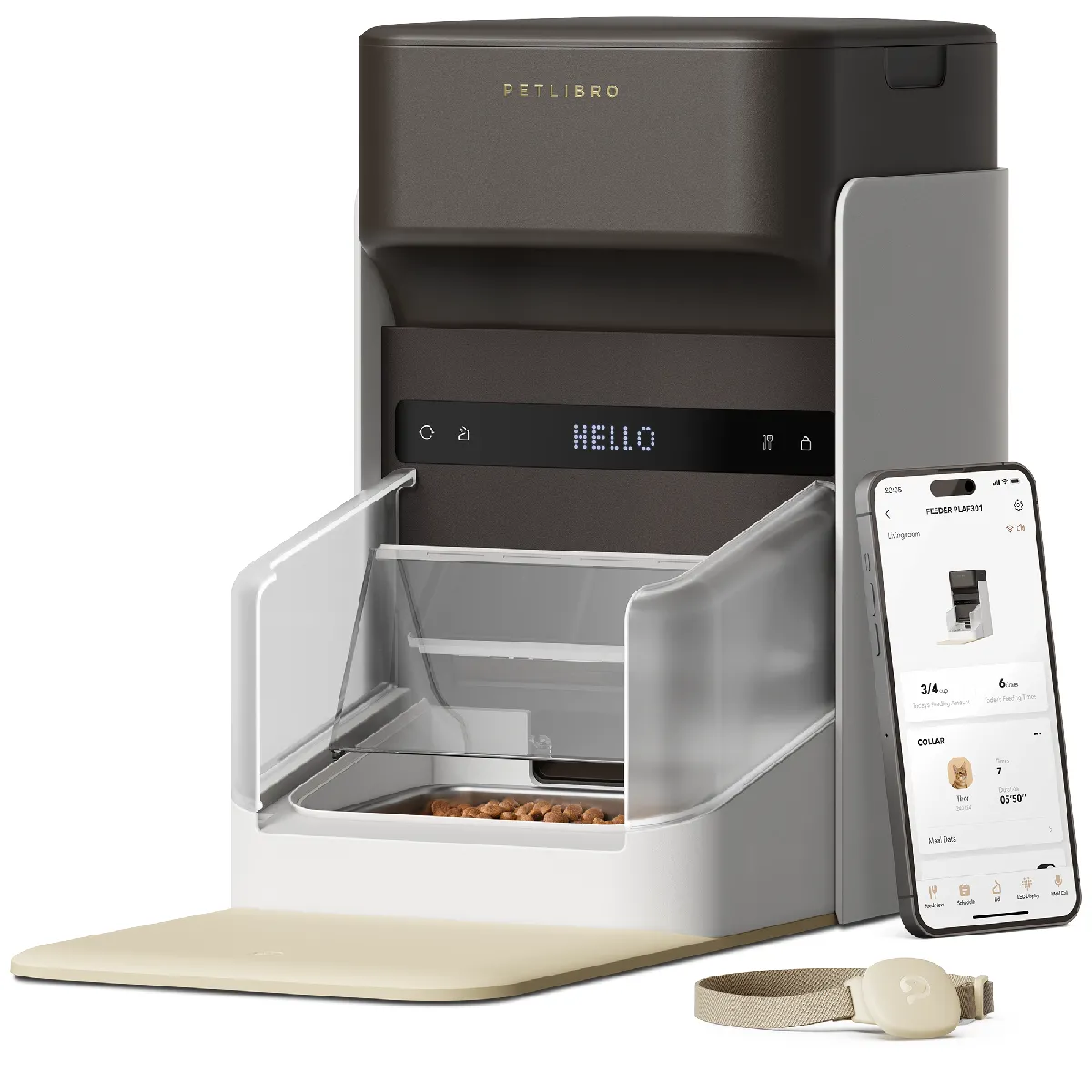
An automatic feeder is a box that drops a measured portion of dry food at set times. It is handy for a late train, an early start or a pet who nags at 5 a.m. It is not a pet sitter, though, and it does not suit every pet. Whether it fits yours depends on age, diet, how long you are away and how many animals share the kitchen.
Check the fit, plan the meals
What a feeder can and can't do
A feeder is good at one thing: putting out the same amount of dry food at the same time every day. That helps a pet who sleeps better on a routine, a cat who likes small meals through the day, or a household where mornings are chaotic.
It does not check on your pet. It cannot tell you if they stopped eating, are limping or have not had a drink. International Cat Care suggests dividing a cat's daily food into several portions, with timed and puzzle feeders as a help. Cats Protection says adult cats can be left up to about 12 hours, and only occasionally. Past that, ask someone to visit. If your pet stops eating, ask your vet.
Cats and dogs need different plans
For cats, International Cat Care recommends splitting the day's ration into at least five portions where you can, and notes that many owners feed two larger meals to suit their day. So for a cat, a feeder that offers up to six meals a day is a good match.
For dogs, Dogs Trust says adult dogs should normally be fed twice a day. A feeder helps by keeping those times steady, but it does not need six meals. Puppies are different: Blue Cross suggests four meals a day from six to twelve weeks, then three, then two from twenty weeks, while Dogs Trust moves to two at six months. The sources differ a little, so ask your vet about your puppy.
The label gives a start. Your vet and the scales decide the amount.
Food-packet amounts are a starting point. Weigh your pet regularly and ask your vet if they are gaining or losing weight, or if you are unsure what they should weigh.
Where this comes from
Set it up before you rely on it
Run it at home for a week before any trip. Weigh a test portion on kitchen scales so you know what really lands in the bowl. Fill the hopper with the same food your pet eats now; changing food suddenly can upset a tummy. Leave fresh water in more than one spot, since a feeder does not give water.
What to look for
- Dry kibble only, in the right size. Check the kibble range the maker allows, and skip feeders for wet food unless they are made for it.
- A power-cut plan. Mains power with battery backup keeps meals on schedule if a plug gets knocked out.
- Portions that match your pet. Small portion steps matter for a cat, and big hoppers are for dogs who eat more.
- A way to see problems. A clear hopper, a low-food alert or an app that tells you a meal was missed.