What size carrier does your cat or small dog need? Measure and check the fit
Will your cat or small dog fit comfortably in their carrier? Vets and airline rules agree on one test: your pet must be able to stand up, turn around and lie down in a natural position. Measure your pet in four quick steps, and see the minimum inside length, width and height.
Then type in your carrier's inside size to check it, side by side. Includes the extra room flat-faced pets need, how to keep the carrier steady in the car, and how to help your pet feel at home in it before the trip.
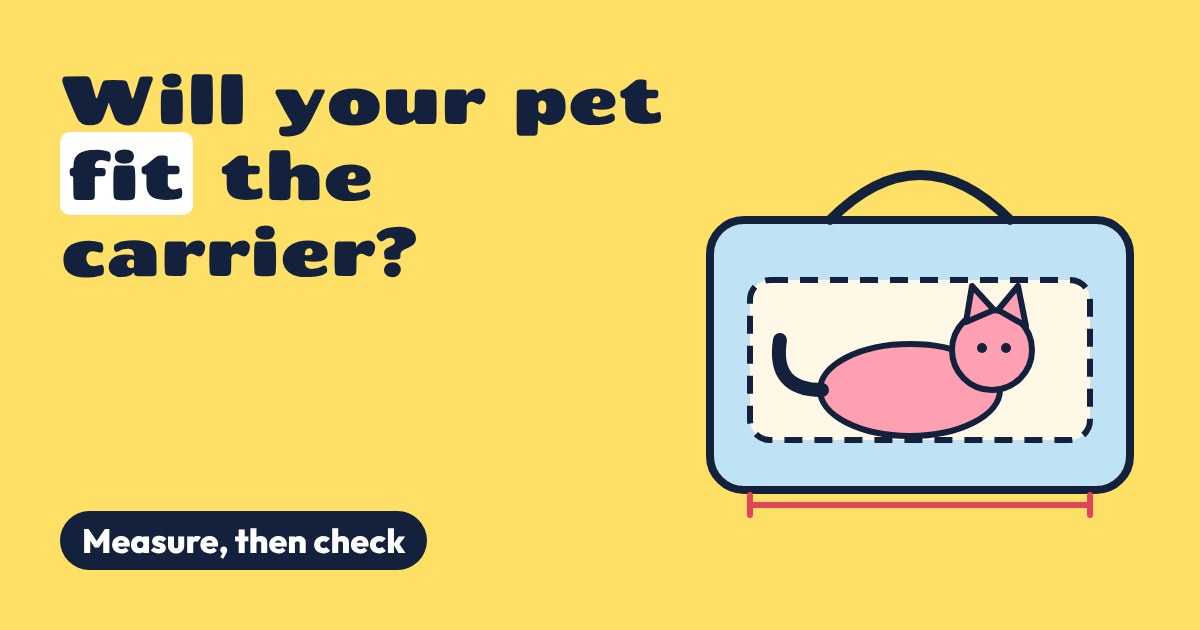
The one rule behind every carrier size
Vets and airlines agree on the basic test: your pet must be able to stand up, turn around and lie down in a natural position inside the carrier. The American Association of Feline Practitioners says this for cats, and the airline industry's rules for cats and dogs (the IATA Live Animals Regulations) say almost the same thing, with the extra words "sit erect".
Labels like "small", "medium" or "up to 6 kg" are only a guess. Two cats of the same weight can be very different shapes, so the safest way is to measure your own pet and compare. The checker below does the sums for you.
Measure your pet, then check the carrier
How the sums work
The formula comes from the airline rules for travelling cats and dogs, which give a minimum, not a target. Length is A plus half of B, so your pet has room to stand and turn. Width is twice C, so they can turn round without being squashed. Height is D plus the bedding. Flat-faced breeds, such as Persians or pugs, need a container about 10% bigger, because they can struggle to breathe in cramped, warm spaces. The rules also say the sums may need adjusting, so if your pet looks cramped, trust your eyes and go up a size.
Measure the inside of the carrier. Thick walls, a ridge on the floor or a zip-in pad can take several centimetres off the number printed in the shop listing. Only one cat per carrier is recommended, except for a mother with her kittens.
Is bigger always better?
Not quite. Above the minimum, a carrier that is too roomy can let your pet slide about on bends and sudden stops. Pick one that fits the minimum with a little spare room, then keep it steady in the car: the American vets suggest latching it with a seat belt or wedging it so it can't slide, keeping it level, and not letting any cat roam loose in the car. They also say harnesses sold as "seat belts" for dogs are seldom effective for cats.
Measure first, shop second: a pet that can stand, turn and lie down comfortably is the test that matters.
What to look for
- Inside size that passes the checker on all three sides, with a little to spare.
- An opening on top as well as the front. Cats are placed in and lifted out with less fuss, and a removable top half lets a nervous cat stay in the bottom half at the vet.
- A sturdy hard shell for most trips. Hard plastic gives better impact protection and can't fold in; a soft carrier is acceptable if at least two sides are mesh or holes for air, but it offers less protection.
- Good ventilation and a secure latch. Never use a pillowcase or a bag, and never leave a pet in a hot car.
Get your pet used to it first
A carrier that only appears on vet day is a scary box. Leave it out open at home, put a blanket, treats or a favourite toy inside, and let your pet walk in on their own. Praise and reward every visit. Then close the door for a few seconds, and later try a short, calm trip round the block before any real journey. If your pet is very anxious about travel, ask your vet for advice. Never push or shake a pet into the carrier.
For long trips, flights or a pet with a medical condition, ask your vet and your airline for their own rules before you buy.