How long before fish can go in a new tank? Track the cycle by the numbers
A new tank can look perfect and still be unsafe, because the bacteria that clear fish waste take weeks to grow. Pick your readings and day count to see which stage of the nitrogen cycle your tank is in, and what to do next.
Fishless cycling is kinder, and the rule is simple: no fish until ammonia and nitrite both read zero.
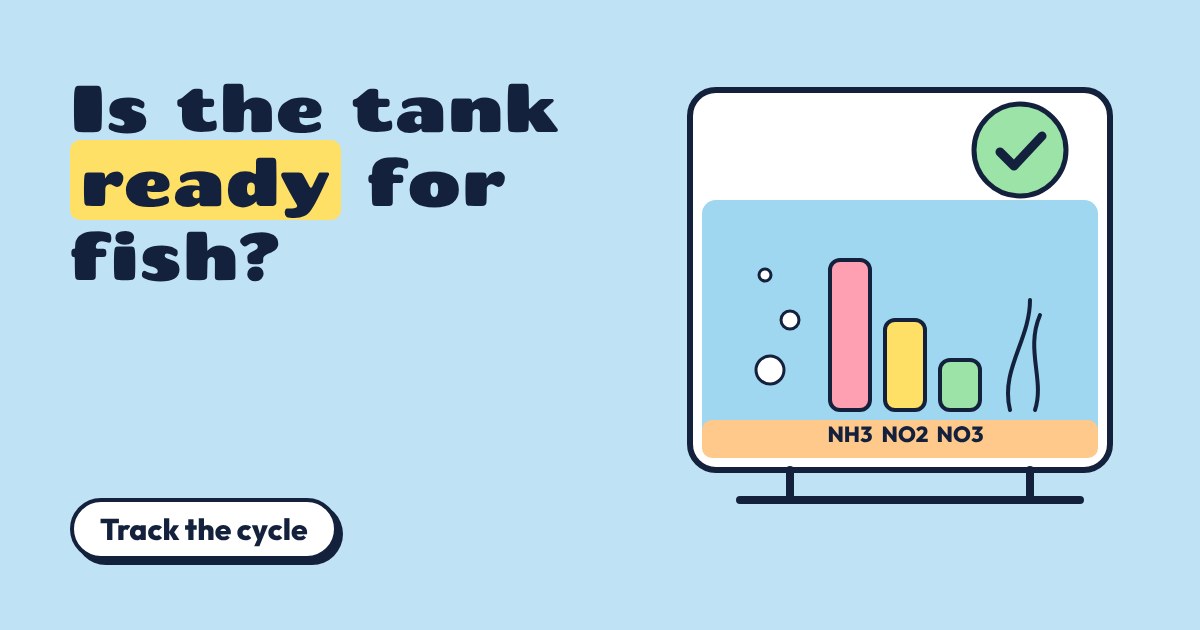
Why a new tank isn't ready yet
A tank that looks clean and clear can still be dangerous for fish. Every fish makes waste, and the waste breaks down into ammonia, which is toxic. In a healthy tank, friendly bacteria living in the filter and on the surfaces turn ammonia into nitrite (also toxic), and a second group turns nitrite into nitrate, which is far less harmful. That two-step clean-up is called the nitrogen cycle, and "cycling" a tank means growing those bacteria before the fish arrive.
A brand-new tank has almost none of these bacteria. Put fish straight in and the ammonia climbs faster than anything can remove it. The RSPCA recommends cycling the tank first, with no fish in it, and adding fish only once ammonia and nitrite have spiked and come back down to zero.
Where is your tank in the cycle?
You will need a liquid test kit for ammonia, nitrite and nitrate (test strips are less precise). Test, pick your readings below, and get the next step.
The three stages, in order
| Stage | What you will see | What is happening |
|---|---|---|
| 1 | Ammonia above 0 | Ammonia-eating bacteria start to grow. |
| 2 | Nitrite appears | A second group starts to turn nitrite into nitrate. |
| 3 | Ammonia 0, nitrite 0, nitrate showing | The two groups now keep up with the waste. |
The Merck Veterinary Manual says these bacteria develop on their own in about 4 to 6 weeks, and the RSPCA says cycling takes at least two weeks with no exact rule. Sources differ, so the honest answer is: wait for the readings, not the calendar.
Fishless or with fish?
The kindest way is fishless cycling: the tank runs with a filter, treated water and an ammonia source, and fish arrive only after the test results say it is safe. Putting fish in a brand-new tank and hoping is stressful and risky for them. If fish are already in, the tracker above shows what to do, but ask a vet or a good aquarium shop for help if they look unwell.
Keeping the bacteria happy
- Never rinse filter media under the tap. Chlorine kills the bacteria. Swish it in a bucket of water taken from the tank.
- Treat all new water. Most tap water contains chlorine or chloramine, which is toxic to fish and bacteria. A dechlorinator removes both; check the label.
- Keep the filter running. It is where much of the bacteria live, and the RSPCA says no fish should be kept without a well set up, well maintained filter.
- Add fish slowly. More fish means more waste, and the bacteria need time to grow to match it. One or two at a time, and quarantine newcomers first.
No fish until ammonia and nitrite both read 0. Wait for the numbers, not the calendar.